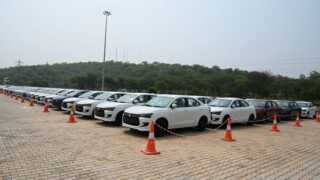
Share via: Maruti Suzuki India Chairman RC Bhargava believes GST restructuring will increase the competitiveness of Indian products and boost the country’s economy. …Read More Maruti Suzuki India Chairman RC Bhargava believes GST restructuring will increase the competitiveness of Indian products and boost the country’s economy. ( ) View Personalised Offers on Check Offers The Indian government has proposed to rationalise its Goods and Services Tax (GST). Prime Minister Narendra Modi, on August 15, announced that the government is working on the restructuring of GST, which is aimed at simplifying the tax structure. As part of that, the government is planning to lower the GST on small cars to 18 per cent from 28 per cent, which is expected to give the segment a huge boost. Maruti Suzuki Chairman RC Bhargava believes this restructuring will increase the competitiveness of Indian products, and the opening of trade borders will bring in the necessary competition, which will help expand the market and benefit customers. Bharagava has said the GST restructuring is a huge reform. Speaking to PTI, Bharagave said the move by the government to restructure GST is an exceedingly important reform measure. “I think the government is doing an excellent thing with taking this up because it will have substantive improvements in the economy as a result,” Bhargava said. When asked to comment on the impact on the automotive industry, he noted: “Until we see the final decisions of the GST Council on the GST system. It’s better if we comment at that stage, rather than on assumptions.” Also Read : Upcoming cars in India The Indian government has proposed a two-tier GST structure with this restructuring. These tax tiers will be of five per cent and 18 per cent. Besides that, there will be a 40 per cent special rate on a select few items. This comes as a more simplified structure compared to the current regime, where GST is levied at five, 12, 18 and 28 per cent. While food and essential items are either at nil or five per cent, luxury and demerit goods are in a 28 per cent slab, with a cess on top of it. GST reform: What it means for car buyers?Currently, automobiles in India are taxed at 28 per cent, which is the highest GST slab. A compensation cess, ranging from one to 22 per cent, is levied on top of this rate, depending on the type of vehicle. This results in the total tax incidence on cars, depending on engine capacity and length, ranging from 29 per cent for small petrol cars to 50 per cent for SUVs. Electric vehicles are taxed at a five per cent rate. Alongside the rising inflation, economic pressure, rising cost of maintenance, and heightening upfront costs, buying a car is often becoming a huge burden for consumers in India. This is eventually hurting the pace of growth for the industry. Especially the small cars that have traditionally been the driving force of the Indian passenger vehicle market, have witnessed a major slowdown over the last few years, as affordability has been impacted. With the lowered GST, the small cars are expected to see a major boost in demand and sales, which will eventually make these cars affordable for consumers, and boost the industry, resulting in improvement of the country’s economy as well. Get insights into Upcoming Cars In India, Electric Vehicles, Upcoming Bikes in India and cutting-edge technology transforming the automotive landscape. First Published Date: 19 Aug 2025, 07:15 am IST
Source: hindustantimes.com

Old Dominion Connects Country Music and Cars
Talking music and cars with Grammy-nominated Old Dominion. Source: caranddriver.com … [Read More...]
Tested: 2002 Maserati Spyder Cambiocorsa, the Brand's Comeback Car
From the archive: An Italian feast for the automotive senses. Source: caranddriver.com … [Read More...]
View Photos of the 2002 Maserati Spyder Cambiocorsa
See the interior and exterior of the 2002 Maserati Spyder Cambiocorsa from every angle. Source: caranddriver.com … [Read More...]
1981 Toyota 4×4 Pickup on Bring a Trailer Sports Awesome '80s Graphics
Transmission: manual. Windows: manual. Front locking hubs: manual. This truck is Clint Eastwood, the Toyota. Source: caranddriver.com … [Read More...]

Tesla Buyer Says, “I Was Supposed To Take Delivery of This Model 3 and the Dealer Said It Got Sent Back, I Think They Lied To Me and Sold It To Someone Else"
Follow us today... When Vanessa went to buy her dream Tesla, the dealership swapped her clean car for an accident-damaged one—is this a hidden disaster or a deal worth the risk? Vanessa Von Graff on the Tesla Model 3 and Model Y Owners Club Facebook page says, "I'm supposed to pay for this car tomorrow. After … [Read More...]
This Ex-IndyCar Driver Wants to Completely Rethink Motorsports
J.R. Hildebrand has envisioned a more dynamic, more exciting way to go racing by going back to the basics and ditching downforce. Source: caranddriver.com … [Read More...]
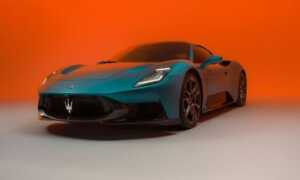
Maserati MCPura launched in India at ?4.12 cr: Italian V6 pushes over 630 bhp
Share via: The Maserati MCPura has been launched in India at ₹4.12 crore (ex-showroom). Offered in coupe and Cielo convertible variants, the supercar gets the 3.0-litre twin-turbo V6 engine with 630 bhp. ...Read More <div class="imgWrapper" data-item-event="image_clicked" data-ga-widget="Image Interactions" … [Read More...]

A Cybertruck Owner Claims Tesla is Throttling His Supercharger Speed In Order To Limit His Free Supercharger Usage – Adds, “Charger Cuts Off Multiple Times During a Charging Session”
Follow us today... Shahab Rahimi, a Cybertruck owner from California, claims that Tesla might be intentionally interfering with his charging sessions to prevent him from fully utilizing his free Supercharger access. Shahab shares that he owns a fairly new six-month-old Cybertruck, which comes with free … [Read More...]

My 1998 Toyota 4Runner Has 330K Miles On It, I Always Said I Would Drive It Until the Wheels Fell Off, Pretty Sure That’s Not Gonna Happen
Follow us today... Meet the owner of a 1998 Toyota 4Runner Limited that has logged 330,000 miles and is so beloved that she refuses to sell her trusty "mulch getter" to the dealership's eager young technicians. Tracy Lynn Plowman Forshee on the Toyota 4Runner Club Facebook page says, "In 1997, I ordered … [Read More...]

I Test Drove The Chinese-Built Zeekr 7X For One Hour And Found Its Quiet Cabin And Lane Centering Technology Outperformed My Volkswagen Golf R
Follow us today... The automotive landscape has shifted dramatically over the past decade, with Chinese manufacturers evolving from budget copycats to genuine innovators capable of challenging established premium brands. This transformation has been most pronounced in the electric vehicle segment, where … [Read More...]